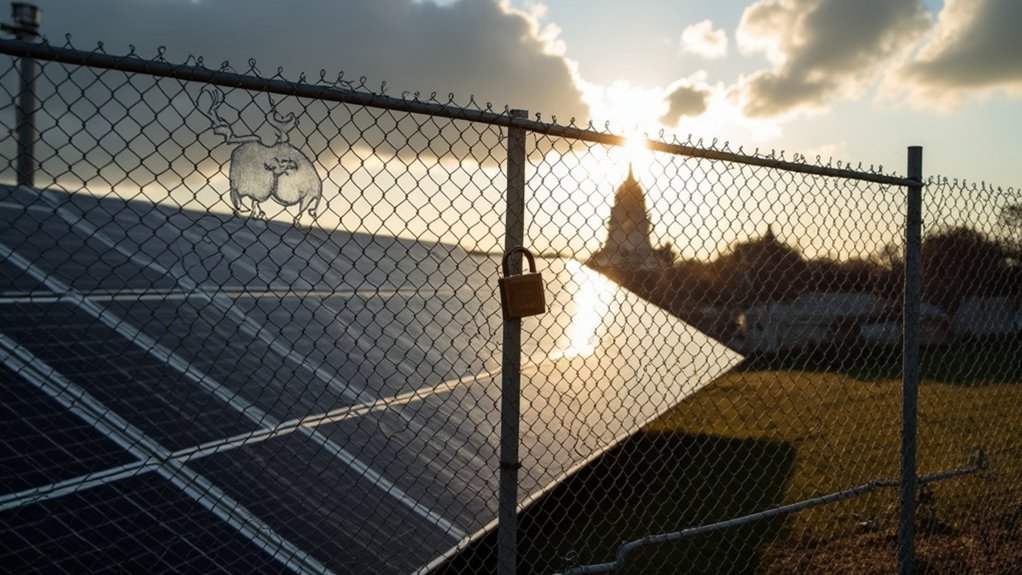

Ohio lawmakers have stripped community solar provisions from the state’s latest energy legislation, blocking residents’ access to shared solar projects until at least mid-2025. The final version of the bill, sent to the governor in May 2025, excluded a pilot program that had appeared in earlier drafts. Instead, legislators focused on other energy policy aspects and rate case timing.
The decision extends existing regulatory barriers that prevent new community solar projects from moving forward. Developers continue to face a moratorium on these shared installations, along with complex permitting processes and interconnection challenges. Without clear statewide standards, consistent project development remains difficult.
Regulatory roadblocks and unclear standards continue to hamstring Ohio’s community solar development, leaving projects in limbo.
This exclusion particularly impacts residents who can’t install their own solar systems. Renters, apartment dwellers, and those with unsuitable roofs have no alternative for accessing solar energy benefits. Low and moderate-income households are especially affected, missing potential savings from shared solar participation. This decision contradicts the growing trend of renewable energy jobs that could provide economic benefits to local Ohio communities.
The community solar setback comes despite previous bipartisan interest among Ohio lawmakers. The program had strong bipartisan support before being excluded from the final legislation. Advocacy groups have expressed disappointment over the program’s removal from the final policy. While solar developers had hoped to expand into Ohio’s community solar market, they now face continued uncertainty and investment delays. This stands in stark contrast to Massachusetts, which recently passed major clean energy legislation that includes permitting reforms and energy storage provisions.
In contrast, individual homeowners recently gained expanded solar rights under separate legislation. Senate Bill 61 now protects residents in planned communities and condominiums who wish to install their own solar panels. Homeowner associations can only impose “reasonable” conditions on size, placement, and method of installation.
Ohio’s approach differs from neighboring states that are advancing community solar frameworks. Without similar community-level programs, Ohio risks falling behind in solar market growth and missing associated economic benefits and job creation opportunities.
State agencies must maintain the restrictions through June 2025, leaving the future of community solar uncertain. Utilities and traditional energy interests reportedly influenced the legislative negotiations, while consumer advocates continue pushing for more inclusive solar access policies that would benefit a broader range of Ohio residents.
References
- https://www.solarpowerworldonline.com/2025/05/ohio-sends-energy-overhaul-bill-to-governors-desk/
- https://solaronearth.com/the-future-of-community-solar-2025-policy-updates-and-what-to-expect/
- https://www.canarymedia.com/articles/solar/community-republican-support-states
- https://www.legislature.ohio.gov/download?key=22630
- https://www.dickinson-wright.com/news-alerts/-ohio-legislature-adopts-new-protections-for-solar-access