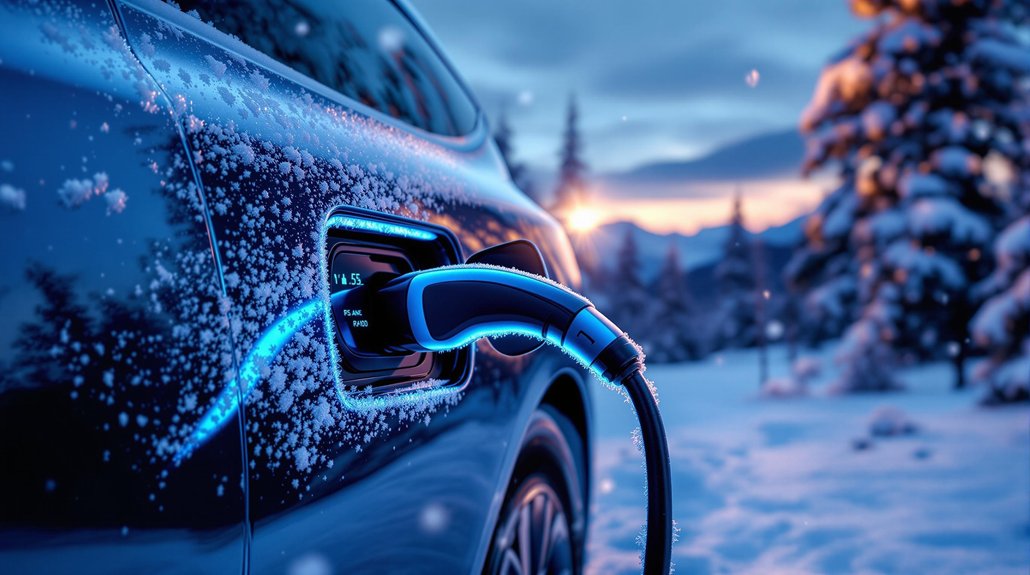

University of Michigan scientists have developed a modified lithium-ion battery that charges five times faster in cold temperatures. This breakthrough allows EVs to achieve “6C” charging even at 14°F, addressing a major frustration for drivers in winter conditions. Researchers enhanced the manufacturing process by creating tiny pathways in the graphite anode using laser drilling techniques. The technology maintains energy density while reducing charging time by over 30 minutes per session. Further details reveal how this innovation works in freezing conditions.
Scientists at the University of Michigan have developed a breakthrough in EV battery technology that charges up to five times faster in freezing temperatures. This modified lithium-ion battery can achieve what’s called “6C” charging at temperatures as low as 14°F (-10°C) without losing energy density.
EV owners in cold climates often face frustrating delays when charging their vehicles. Cold temperatures increase the battery’s internal resistance, which dramatically slows down the charging process. Additionally, heating systems in EVs use about 25% more electricity during cold weather at highway speeds, further reducing efficiency.
The new technology could save drivers more than 30 minutes per charging session during winter conditions. This improvement addresses one of the biggest challenges for electric vehicles: their decreased performance in cold weather.
The innovation comes from adjustments in the manufacturing process for lithium-ion batteries. These changes enhance the electrode and electrolyte properties, allowing electricity to flow more quickly through the battery even when it’s cold.
What makes this advancement particularly valuable is that it maintains the original energy density of the battery. The Battery Management System monitors battery health to ensure optimal performance in extreme temperature conditions.
Battery state of charge (SoC) plays an important role in these improvements. Batteries naturally charge fastest when they’re nearly empty (low SoC). The new technology takes advantage of this principle, optimizing the rapid 6C charging performance especially when starting with a lower charge level.
This advancement has environmental benefits too. It reduces the need for fossil fuel vehicles during winter, cuts emissions from extended charging sessions, and may increase EV adoption in colder regions. Like other Battery Energy Storage Systems, this technology helps provide grid reliability during peak demand periods.
For EV owners in cold climates, the technology means less time waiting for a charge. The researchers created tiny pathways in the graphite anode using laser drilling techniques to improve lithium ion reception. It helps electric vehicles remain competitive with gas-powered cars during winter months.
With charging times reduced by up to 30 minutes per session, electric vehicles become more practical year-round transportation options, even in places with harsh winters.