Smart farming isn’t just surviving climate change—it’s essential for adapting to it. As traditional methods falter against extreme weather, precision agriculture offers solutions through IoT sensors, AI crop predictions, and water-conserving techniques. The digital transformation in farming is happening just in time. Sure, there’s an upfront cost, but it’s better than the alternative: crop failure. The $9 billion FCC investment in rural 5G isn’t charity—it’s survival strategy. The future of food depends on these innovations.
While traditional farmers once relied solely on intuition and experience, today’s agricultural landscape is transforming through technology at breakneck speed. As climate conditions deteriorate, precision agriculture is becoming less of a luxury and more of a necessity. GPS, sensors, and data analytics now optimize everything from seed placement to harvest timing. Fancy stuff. Big farms in the U.S. are jumping on this tech train fast—68% of them as of last year.
The age of gut feelings is giving way to GPS precision—farming’s digital revolution isn’t fancy anymore, it’s survival.
The Internet of Things isn’t just for smart homes anymore. Farmers are strapping sensors on everything. Soil? Sensored. Livestock? Wearing tech like teenagers with smartwatches. These networks collect real-time data that used to take days or weeks to gather. Water only when needed. Feed only what’s necessary. The efficiency is almost annoying to traditional farmers who “did just fine without all this nonsense.” With 5G technology enhancing agricultural operations, the Federal Communications Commission has allocated $9 billion for expanding this crucial infrastructure in rural farming communities.
Artificial intelligence doesn’t just beat humans at chess now—it’s predicting crop yields and spotting plant diseases before they spread. Machine learning algorithms process mountains of farm data that would make a human’s head explode. It’s like having a super-smart farm manager who never sleeps or complains about the heat. These systems also help farmers implement crop rotation techniques that confuse pests and reduce infestations while promoting healthier growth.
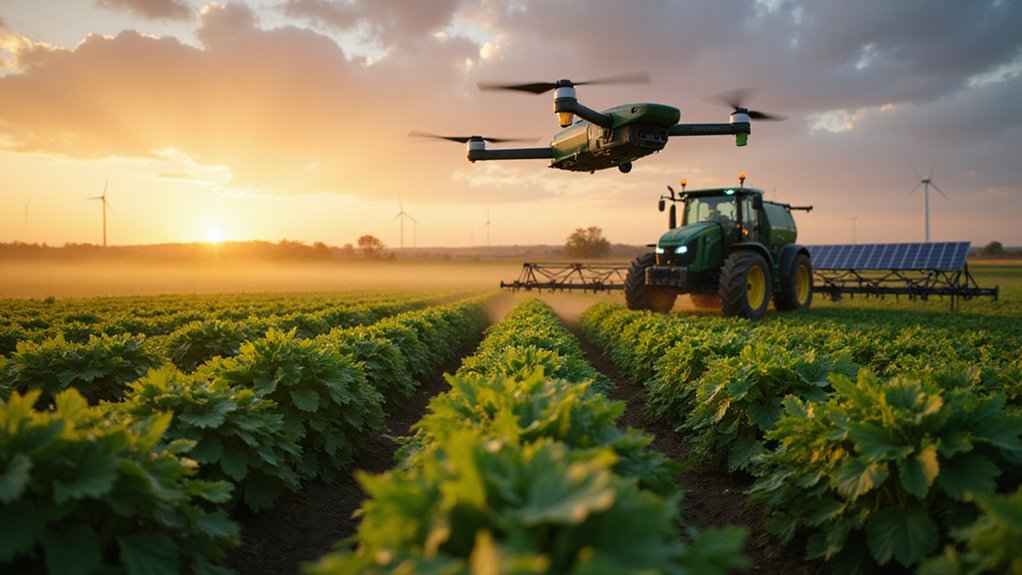
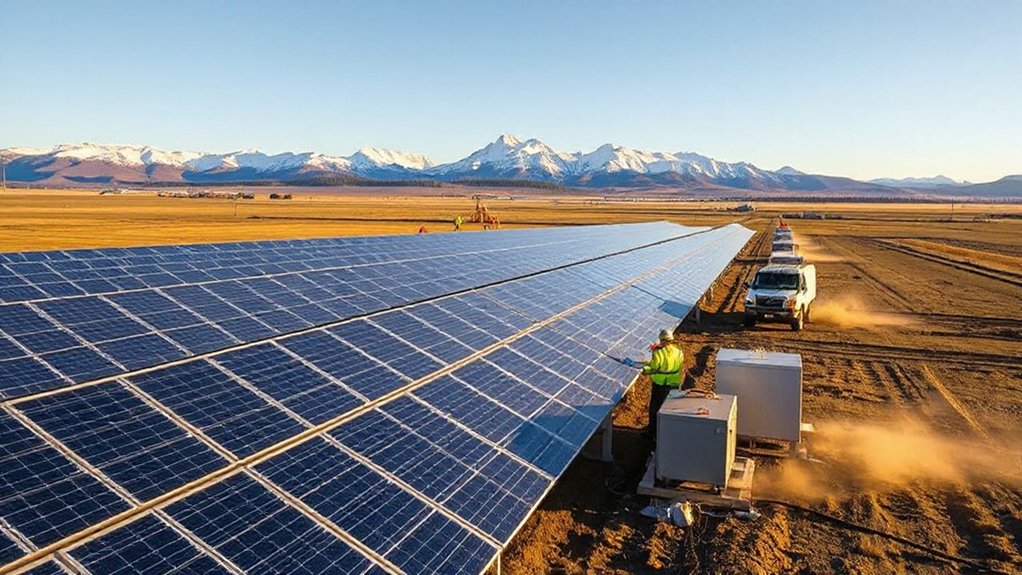
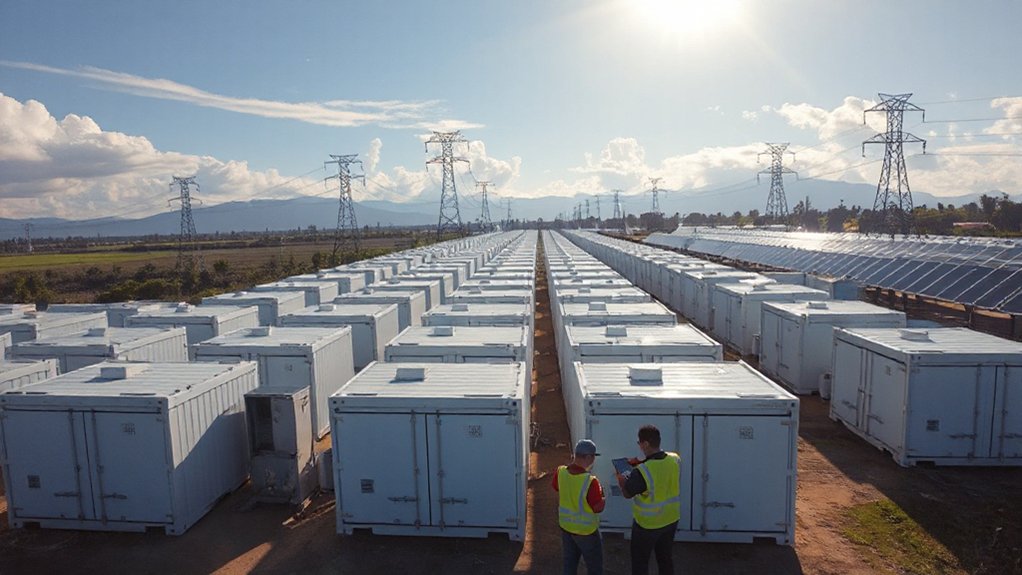
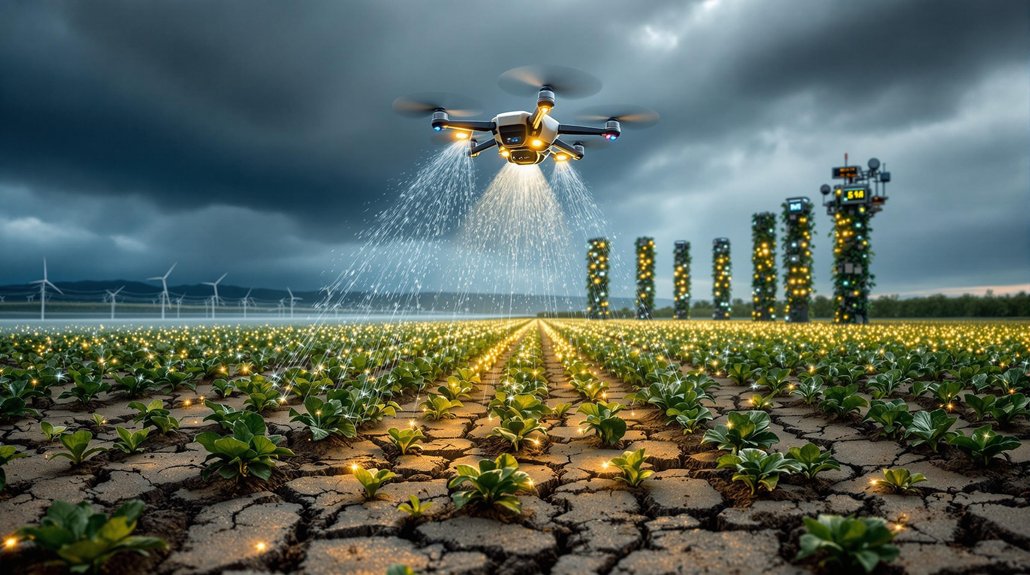
Robots are taking over, too. Self-driving tractors. Automated milking systems. Drones spraying fields. No coffee breaks. No bathroom stops. Just relentless efficiency. Labor costs down. Precision up. Similar to how solar power requires minimal maintenance with no fuel costs, these automated systems provide substantial long-term savings despite initial investment.
But here’s the kicker: as climate worsens, these technologies might be our best shot. Vertical farming uses 95% less water than traditional methods. Agroforestry practices make farms more resilient to those increasingly common “once-in-a-century” weather events. And blockchain technology guarantees we understand exactly where our food comes from when supply chains get disrupted.
The question isn’t whether smart farming can survive climate change—it’s whether farming can survive without getting smarter. Old-school methods won’t cut it when rainfall patterns shift and growing seasons transform. Adapt or perish. That’s just nature’s way. Always has been.